
Selling a Home with Unpermitted Work in Florida: Your Options

Unpermitted work doesn’t automatically prevent a Florida home sale. Selling a home with unpermitted work in Florida is possible, but buyers may have questions about safety, value, financing, and responsibility for the work. Sellers should disclose known issues that could materially affect the property and aren’t readily observable.
A move can put pressure on you to decide quickly, but the fastest route may not be the best fit for your sale. Depending on the work and the buyer’s needs, you could pursue an after-the-fact permit, disclose the issue and negotiate, or sell as-is. Each option can affect the transaction differently.
This article explains what Florida sellers should disclose, how unpermitted work can affect offers and financing, and when a retroactive permit may make sense. You’ll also learn how to weigh your options when a relocation deadline is part of the picture, so you can plan your sale with greater clarity.
Table of Contents
Can I get retroactive permits in Florida?
Yes. Florida sellers can apply for an after-the-fact permit for completed work. Penalties for unpermitted renovations may include fines, stop-work orders, required corrections, re-inspections, or, in severe cases, partial removal.
After-the-Fact Permit Applications
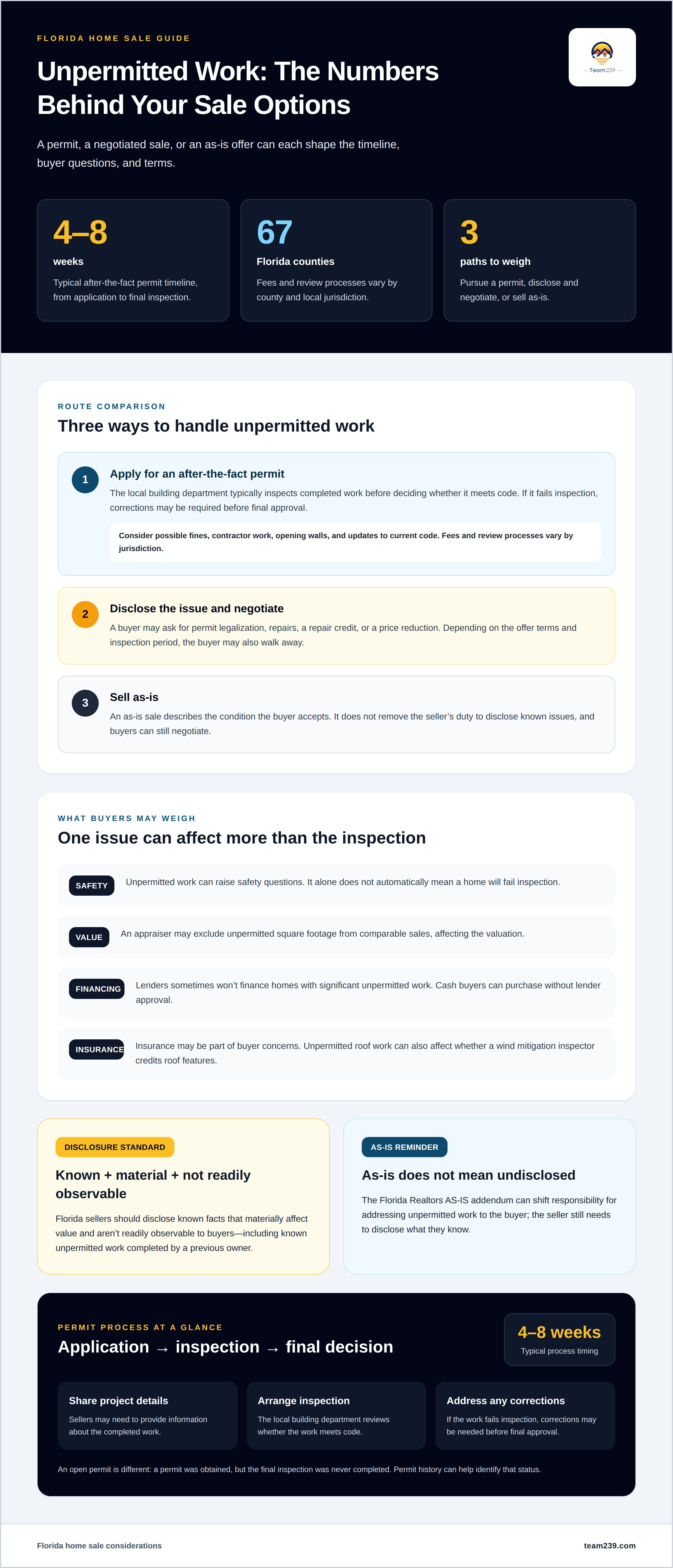
An after-the-fact permit is an application for work completed without a required permit. It can bring additions, garage conversions, plumbing changes, and other renovations into the local permit record. The local building department typically inspects the work before deciding whether it meets code.
Sellers may need to provide project details and arrange an inspection. If the work fails inspection, corrections may be required before final approval. When the work passes, the process typically takes 4-8 weeks from application to final inspection. For example, a garage conversion may need review of its construction and recorded square footage.
Permit History and Open Permits
Permit history is the local building department’s record of permits associated with a property. A real estate professional can help sellers review local records, identify permits without final inspection, and flag discrepancies for follow-up. An open permit means a permit was obtained but never received its final inspection. It differs from work completed without any permit.
That distinction matters during a sale. Permit records may show a renovation permit even though the final inspection is still outstanding. A real estate professional can help organize the details and clarify the permit status during transaction discussions.
Permit Fees and Potential Penalties
Fees and review processes vary among Florida’s 67 counties and local jurisdictions.
Sellers should consider possible fines, contractor work, opening walls, and updates to current code before applying. A permit professional can explain application requirements and potential cost factors to help sellers weigh their options.
Florida seller disclosure obligations
Florida sellers should disclose known unpermitted work that materially affects value and isn’t readily observable. This includes work done by a previous owner if the current seller knows about it.
Disclosing Known Material Defects
Florida’s disclosure standard covers known facts that materially affect a home’s value and aren’t readily observable to buyers. It applies to unpermitted renovations, not only visible damage. The Florida Supreme Court’s 1985 decision in Johnson v. Davis established this standard, also reflected in Florida Statute 475.278.
For example, a seller who knows about an unpermitted garage conversion should disclose it during the sale, even if a previous owner did the work. Florida real estate licensees must disclose known facts that materially affect residential property value and aren’t readily observable, according to the Florida Legislature.
As-Is Sales and Disclosure
An as-is sale covers the condition in which the buyer accepts the property; it doesn’t remove the seller’s duty to disclose known issues. The Florida Realtors AS-IS addendum can shift responsibility for addressing unpermitted work to the buyer, but sellers still need to disclose what they know.
Be clear about the work and its known permit status during the listing and contract process. A buyer may negotiate a lower price, request a repair credit, ask for permit legalization, or walk away. Lenders may also consider the issue when reviewing financing.
Disclosure can reduce the risk of a dispute after closing. A Florida seller who conceals known unpermitted work may face a lawsuit alleging misrepresentation or fraud. That risk can remain even when a contractor performed the renovation or the seller agreed to sell as-is. Clear disclosure gives buyers a chance to assess the conversion, discuss repairs or credits, and make an informed decision before closing. For help presenting a home and its known condition clearly, residential resale representation can support the sale process.
Can You Sell a House with Unpermitted Work in Florida?
Selling a home with unpermitted work in Florida is possible, but the work may shape buyer concerns and sale terms. When deciding how to proceed, consider the property’s condition, the type of work, and likely inspection requirements.
Florida buyers may request permits, repairs, credits, or a price adjustment before closing. If an inspection identifies code violations, the building department may require corrections and another inspection.
Buyer Concerns and Financing Effects
Unpermitted work can raise questions about safety, value, insurance, and financing. A home inspector may note visible concerns, but unpermitted work alone doesn’t automatically mean a home will fail inspection.
An appraiser may exclude unpermitted square footage from comparable sales, affecting the valuation. Lenders sometimes won’t finance homes with significant unpermitted work, while cash buyers can purchase without lender approval. Unpermitted roof work can also prevent a wind mitigation inspector from crediting features such as roof deck attachment or opening protection.
A garage conversion or electrical upgrade may affect buyer confidence and financing options. Selling a home with unpermitted work in Florida can mean weighing both the property’s condition and buyers’ access to financing.
Buyer Negotiations and Sale Options
Buyers may negotiate after learning about unpermitted work. They can ask sellers to legalize it, complete repairs, offer a repair credit, or reduce the price. Depending on the offer terms and inspection period, a buyer may also walk away.
An as-is sale doesn’t prevent negotiation. It means the buyer considers the property in its current condition, while disclosure obligations still apply. Sellers can compare a credit with completing corrections, taking into account the work’s scope, inspection findings, and buyer response.
For example, a buyer concerned about an unpermitted bathroom remodel might request a credit instead of asking the seller to complete repairs before closing.
Permits, Repairs, and Inspection Outcomes
During negotiations, buyers may request permit legalization or repairs. Sellers can consider those terms, a credit, or a price adjustment. Buyers may also decide not to proceed.
If an after-the-fact inspection finds code violations, required corrections may involve hiring contractors, opening walls, or updating work to current code. The local building department may require a re-inspection before final approval. For a garage conversion, inspection findings could affect the approved square footage or identify construction that needs correction.
Those outcomes can change the transaction’s cost and timing, so sellers should consider inspection requirements when evaluating repair terms.
Selling a property with unpermitted work and relocation pressures
A relocation adds another moving part: the home sale and departure need to line up. If the home has an unpermitted addition or structural change, a rushed listing decision can create avoidable uncertainty about disclosures, buyer questions, and timing.
Start by connecting the property issue to your moving priorities. If you need to leave before permit questions are resolved, an as-is sale may be worth considering. If the work affects safety, usable space, or the listing’s square footage, resolving the permit issue first may make for a clearer presentation. The best path depends on the work, likely inspection requirements, and your planned departure.
For example, a seller relocating from Naples may have an addition included in the home’s advertised living area, while permit records tell a different story. The listing should disclose known facts and avoid presenting unverified square footage as approved. Buyers can then assess the property with accurate information, rather than raising the issue late in negotiations. That clarity can help sellers compare offers with their moving plans in mind.
Timing also affects which commitments are practical. Pursuing an after-the-fact permit may involve an inspection and corrections, which can complicate preparations to leave. If you sell without completing that process, the discussion may turn to buyer requests, credits, or price. If you have a firm relocation date, weigh these possibilities before accepting terms that require work before closing.
A real estate professional can help connect the home’s known permit history, listing details, and sale negotiations to the relocation timeline. That does not replace building-department decisions, but it can help keep the property’s presentation and transaction priorities aligned. For sellers planning a move, explore relocation consulting as part of the sale strategy.
Team239
Team239 helps sellers connect permit concerns with a clear residential sale strategy. When unpermitted work affects the listing, buyer discussions, or relocation timeline, professional representation can help keep those priorities in view. Residential Resale Representation supports the sale process, while Relocation Consulting can help align the move with decisions about the property.
Bring the known permit details and your intended moving timeline into the conversation. That context helps shape how the home is presented and how buyer questions fit into your plans. If you’re preparing to sell a Florida home with unpermitted work, contact Team239 to discuss your sale and relocation needs.
Set Your Sale Plan in Motion
Before your next move, make the property’s permit history part of your sale strategy. A clear plan can align listing details, buyer communication, and your preferred timing, rather than leaving decisions until an offer arrives. If you’re selling a home with unpermitted work in Florida, connect the home’s specific circumstances with your goals for the sale.
Consider your priorities: moving on a particular schedule, presenting the home to a broad range of buyers, or resolving questions about the work before listing. Those priorities can guide your preparation for buyer discussions and help you evaluate proposed terms. The right approach depends on the property and your transaction goals, so make a plan that accounts for both.
When you’re ready to discuss your next steps, contact Team239 about your home. A thoughtful plan can help you move forward with greater clarity and confidence.
Frequently Asked Questions
What If You Don't Fix It Before Closing?
You may still close without completing the work if the buyer agrees to the transaction terms. The buyer could request a credit, negotiate a price change, seek permit legalization, or decide not to proceed. For example, an unresolved electrical concern may affect financing or the buyer’s repair plans. The signed contract and any negotiated amendments determine the parties’ agreed obligations.
Can I sell an inherited house if I’m not sure what was permitted?
Uncertainty about permit records doesn’t automatically prevent you from selling an inherited home. Share what you know about renovations, and don’t present uncertain details as verified facts. A real estate professional can help review available local permit records and identify questions to address in the listing or transaction. For instance, records may show a renovation permit without documenting its final inspection.
Do I have to disclose unpermitted work if a previous owner did it?
If you know about unpermitted work that materially affects value and isn’t readily observable, disclose it even if a previous owner arranged it. The disclosure standard focuses on what the seller knows, not only on who hired the contractor. For example, if you know a former owner converted a garage without a permit, share that with prospective buyers rather than treating the work’s age or prior ownership as a reason to leave it out.
How much does unpermitted work affect value?
The effect depends on the work’s condition, scope, and influence on the home’s usable space or systems. A clean addition in a desirable neighborhood may sell at a 3-8% discount compared with a similar permitted home. Complex structural or system-level concerns may warrant a 10-15% discount. These comparisons aren’t a fixed formula; an appraiser may exclude unpermitted square footage from comparable analysis.
How much more does an after-the-fact permit cost?
The added fee depends on the local jurisdiction’s rules. Pinellas County normally charges double its usual permit fee for after-the-fact applications. In Clearwater, the first after-the-fact permit costs triple the permit fee. The city’s repeat violation fee for the same contractor is 10 times the permit fee. Fines and required corrections can add costs beyond the permit charge.
Is selling as-is enough to protect me?
No. An as-is sale doesn’t remove the obligation to disclose known, material issues, including unpermitted work. Contract terms may assign responsibility for remediation to the buyer, but that doesn’t replace disclosure. Concealing a known issue may expose a seller to a post-sale claim alleging misrepresentation or fraud. For example, disclose a known unpermitted room conversion even if the buyer accepts the property as-is.
This content is for informational and entertainment purposes only, not legal or financial advice. The owner of Naples Florida Real Estate makes no representations about its accuracy or completeness; information may change. Consult Kristin and Jonathan Van Heukelom or another licensed real estate agent for advice specific to your situation. The owner isn’t liable for errors, omissions, availability, or losses, injuries, or damages arising from displaying or using this information.
Comments