
Selling a Florida Home with Leased Solar: What Buyers Consider

Solar panels don’t automatically make a Florida home harder to sell, but a lease can affect who can buy it and how the sale is structured. When selling a home with a solar lease in Florida, the buyer may need to assume the agreement and qualify with the solar provider. The lease payment may also affect mortgage qualification. Make sure the MLS listing clearly identifies the system as leased, not owned and included with the home.
A lease can raise questions about buyer interest, offers, financing, and timing. The panels aren’t just a feature: the lease is part of the sale. This guide explains how buyers may weigh the payment and transfer, what sellers can expect, and why clear MLS disclosure matters. It also covers the documents and decisions that shape the process, helping you set expectations with buyers early.
Table of Contents
1. Are houses with solar panels easier or harder to sell?
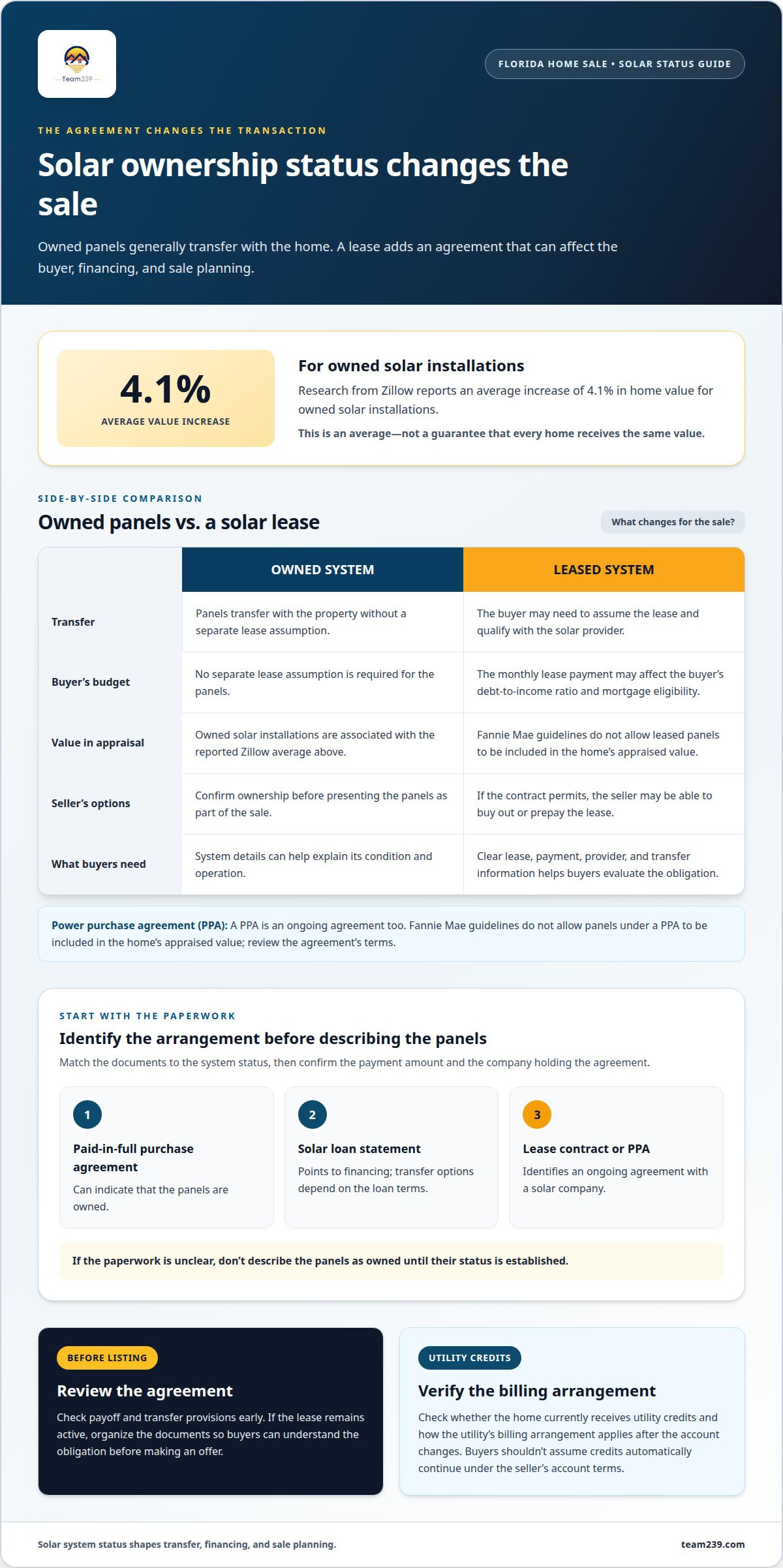
Solar panels can attract buyers, but ownership status affects the purchase and sale process. Owned systems are generally simpler to transfer because they don’t require a lease assumption. Owned solar installations increase home values by an average of 4.1%, according to research from Zillow. That figure doesn’t mean every home receives the same value. A real estate professional first establishes whether the panels are owned, leased, financed, or covered by a power purchase agreement (PPA).
Start by reviewing the solar documents, payment records, and utility bills to identify the arrangement. A paid-in-full purchase agreement can indicate ownership. A loan statement points to financing, while a lease contract or PPA identifies an ongoing agreement with a solar company. Confirm the payment amount and the company holding the agreement. If the paperwork is unclear, don’t describe the panels as owned until their status is established. That distinction shapes how the system is presented and what the buyer may need to take on.
Leases and solar loans create different obligations. A lease may require the buyer to assume the agreement, while a loan involves repayment and may have transfer options set by its terms. Owned panels transfer with the property without a separate lease assumption. For utility net-metering rules or incentives, start by checking whether the home currently receives utility credits and how the utility’s billing arrangement applies after the account changes. Buyers shouldn’t assume credits automatically continue under the seller’s account terms.
A seller may be able to buy out or prepay a solar lease before selling if the contract allows it. Review the agreement’s payoff and transfer provisions, then account for the chosen option in sale planning. If the lease remains active, clear documentation helps buyers understand the obligation before making an offer. Clarifying this early can prevent confusion about whether the panels are included in the purchase or come with a separate payment and agreement.
2. Possible effects of leased panels on a buyer’s offer or mortgage
A solar lease adds a monthly obligation to the buyer’s budget. In Florida, that payment may increase the buyer’s debt-to-income ratio and affect mortgage eligibility. An offer may also reflect whether the buyer is willing and able to take on the lease. Because the lender evaluates the buyer’s overall obligations, discuss the solar payment during the financing conversation, not after the offer is accepted.
Lease assumption may require a provider review, paperwork, and a credit check. Some solar companies require buyers to have a credit score around 650 to 680. The threshold depends on the provider and agreement. Buyers should review the provider, system warranty, remaining lease costs, and any transfer requirements. A warranty can clarify what coverage applies to the panels or equipment, while the lease reveals the payment and transfer process.
Coordinate the transfer by organizing the lease documents, identifying the solar provider, and aligning the provider’s application with the home-sale timeline. The buyer’s qualification and the lender’s review both need to move forward. If the lease transfer isn’t approved or the added payment changes mortgage eligibility, the parties may need to consider another option before closing.
Can a solar lease complicate mortgage approval, title, or closing in Florida? Yes. The lease payment can affect mortgage qualification, and a solar-related lien or encumbrance may need to be resolved before title transfers. Reviewing the documents early can surface both issues while the buyer and seller still have time to plan.
If the buyer refuses to assume the lease, the seller may be able to prepay it if the contract permits. The agreement’s payoff and transfer terms determine whether that resolves the obligation. Lease documents can also address panel removal, roof repairs, and warranty responsibilities. A professional reviews those provisions and notes any visible roof damage for the transaction.
For buyers considering solar terms alongside a new-build purchase, New Construction Buyer Representation can help guide the home-buying process.
3. Selling a home with a leased solar system or PPA
A lease or power purchase agreement (PPA) adds a contract to the home sale, not just equipment on the roof. For a seller selling a home with a solar lease in Florida, identifying the agreement early helps shape the transaction plan. Solar leases commonly run for 20 years, so an active agreement may remain in place when the home is listed. A real estate professional reviews its transfer or buyout terms and organizes the information buyers need to evaluate the obligation.
System records help buyers understand what they may take on. Organize available details about energy output, maintenance, and warranties, and arrange a professional inspection of system functionality. This applies to owned and leased systems. Roof condition matters too: assess any solar-related roof damage during the sale, alongside contract terms covering equipment removal or roof work. Together, these details clarify the system’s condition and responsibilities.
Take care when discussing value. Fannie Mae guidelines do not allow leased solar panels or panels under a PPA to be included in a home’s appraised value. You can still describe relevant system details, including performance, panel brand and age, inverter types, monitoring hardware and software, and warranty. These factors explain the system’s condition and operation without presenting leased equipment as owned property or assigning it an unsupported dollar value.
How does a solar lease affect selling a home in Florida? The buyer may need to assume the agreement, and related obligations or recorded filings can affect the transaction. For anyone selling a home with a solar lease in Florida, a professional can coordinate contract review and transfer timing with the sale, while the title company checks applicable property records. A UCC-1 filing may be recorded in land records, and many title companies do not search for residential solar UCC-1 liens. Early attention to the agreement, system inspection, and roof condition helps surface issues before closing.
4. Disclosing leased solar panels in MLS listings
The MLS entry should identify leased panels as leased, not suggest they’re owned or included in the home’s purchase. Before the listing goes live, confirm with the seller whether solar equipment is present and leased. Record the system’s status in the listing agreement too. This gives marketing details and buyer conversations a consistent starting point.
In the listing, use the form’s green information section to describe the system. Distinguish a lease from owned panels or a solar loan, and avoid wording that could leave buyers thinking the panels transfer without an agreement. Clear wording matters: “leased solar panels” tells buyers more than a general reference to solar energy.
Specifics help buyers understand the listing. Organize the lease or power purchase agreement details, including the solar provider, payment, and transfer process. Buyers can use these facts to consider the ongoing obligation alongside the home’s other costs. Make sure the listing matches the documents and seller-provided information. Don’t imply that a buyer automatically qualifies for a transfer or that the seller has paid off the contract.
What disclosures must Florida sellers provide about leased solar panels? Clearly state that the panels are leased and document their status in the listing agreement. Disclose and document solar-related obligations early in the transaction, so buyers can review the agreement and understand the proposed transfer.
Keep information consistent beyond the MLS. If the listing describes leased equipment as owned or omits the lease, a buyer could be surprised by an obligation after making an offer. The Seller Property Questionnaire may give a buyer who was not clearly informed the right to cancel the contract and recover the deposit. Keep the listing description, agreement details, and transaction documents aligned.
For a listing where accurate presentation matters, work with Team239 on luxury property listing services and bring the solar agreement into the marketing plan from the start.
Team239
Team239 helps Southwest Florida homeowners plan residential sales with clear, coordinated representation. When a solar lease is part of the transaction, the team can help keep its status and buyer-facing details aligned with the broader listing strategy. That means considering how the agreement affects the home’s presentation, buyer questions, and sale process, rather than treating the panels as a standalone feature.
Through Residential Resale Representation and Luxury Property Listing Services, Team239 supports sellers preparing a home for market and presenting its features accurately. If you’re planning a move and need support beyond the sale, Relocation Consulting can help connect the real estate decisions to your next step.
Contact Team239 to discuss your home sale and selling a home with a solar lease in Florida.
Plan your next move with clarity
Selling a home with a solar lease in Florida calls for a sale strategy that reflects both your property and your plans. Before setting your next move in motion, consider your preferred timing, priorities for the home, and how the sale connects to what comes next. A thoughtful plan helps keep those decisions aligned as you move from preparation to buyer conversations.
This is also a chance to think beyond the listing itself. You may be selling a current home while planning a relocation or considering another purchase. Bringing those goals into the same conversation can help you make decisions with a clearer view of the transition, rather than treating each step in isolation. Contact Team239 about your solar home sale to discuss a path that fits your plans. You can move forward with purpose and a strategy shaped around your next chapter.
Frequently Asked Questions
Are houses with solar panels easier or harder to sell?
Neither outcome applies to every home: ownership and lease terms shape buyer interest. For example, a buyer comparing two similar Florida homes may view owned panels differently from a lease with a separate monthly obligation. A clear explanation of the system’s status helps buyers assess the full purchase, while unclear terms can create uncertainty during negotiations. Panel condition and documented performance can also influence how buyers perceive the home.
Do solar warranties transfer when you sell your home?
Warranty transfer depends on the warranty and solar agreement. Before the sale, identify which documents cover the panels, inverter, installation, or other equipment, and whether each sets transfer conditions. Buyers benefit from knowing the coverage period, exclusions, and process for requesting service. Include relevant records with the transaction documents so the buyer can see what protections continue after ownership changes.
Can a buyer assume or transfer a solar lease when purchasing a Florida home?
Yes, a buyer may assume a solar lease if the provider permits the transfer and the buyer qualifies. The provider’s review may include a credit check and application. If the buyer won’t assume the agreement, the seller’s alternatives depend on the contract, which may allow prepayment. Establishing the transfer path early helps both parties understand whether the lease can continue with the new homeowner.
What are the steps and fees to transfer a solar lease to a homebuyer?
The seller and buyer typically start by reviewing the lease’s transfer terms and identifying the solar provider. The buyer then applies through the provider and completes any required credit review and paperwork. Coordinate the provider’s approval with the home-sale timeline and retain written confirmation of the agreed transfer. Any transfer or processing fees depend on the provider’s contract terms; don’t assume they’re included in the monthly payment.
How do solar lease payments and terms affect home appraisal and resale value?
A lease payment can affect how a buyer budgets for the home and may influence mortgage qualification. Appraisal treatment is separate: leased panels aren’t counted as home value under Fannie Mae guidelines. For resale discussions, focus on remaining obligations, transfer conditions, and documented system performance. This gives buyers a clearer basis for weighing the home and lease together, rather than treating the panels as an owned upgrade.
What Florida utility net-metering rules or solar incentives affect a leased system after a home sale?
Check whether the home currently receives utility credits and how the utility’s billing arrangement applies after the account changes. Buyers shouldn’t assume credits continue under the seller’s account terms.
Comments