
Is Fort Myers Budget-Friendly for Retirees? Consider Climate and Access

Fort Myers can be a budget-conscious retirement choice, but housing is only part of the picture. Housing costs average 15 percent below the national average, so the answer to whether Fort Myers is a good place to retire on a budget depends on how the climate, transportation, and other day-to-day needs fit your plans.
Warm weather and convenient airport access can make the area appealing, while summer heat, hurricane season, and the need for a car can affect the practical and financial side of retirement. It’s worth weighing those trade-offs alongside your housing budget.
This guide compares Fort Myers housing costs with other Florida destinations and considers its climate, hurricane season, transportation, and airport access. These factors can help you judge how the city’s advantages and everyday costs fit your retirement plans.
Table of Contents
Climate, heat, and hurricane season
Fort Myers has warm winters, hot summers, and a distinct hurricane season. These patterns can shape your daily routine and determine when you prefer to spend time outdoors.
Heat and Temperature Considerations
Fort Myers averages 84 degrees Fahrenheit throughout the year, with clear seasonal differences. Temperatures reach 90 degrees most days from June to September, and summer readings commonly rise into the 90s. Winter highs commonly reach the mid-70s. These contrasts matter if you enjoy outdoor activities or prefer cooler weather, since the season can affect when you walk, garden, or spend time outside.
Summer is also the rainy season, with thunderstorms likely to pass through on many afternoons. Consider whether you can shift outdoor plans indoors or to earlier hours. For example, someone who prefers afternoon walks may find summer less convenient than someone comfortable adjusting plans around storms.
Snowbird season runs from late October to the end of March. That period includes Fort Myers’ milder winter highs, making seasonal weather an important lifestyle consideration. Think about whether you want warmth year-round or expect to enjoy the area mainly in winter.
Hurricane Season Considerations
Hurricane season in Fort Myers runs from June 1 to November 30. It overlaps with the hottest months and the summer rainy season, so weather planning is part of evaluating a year-round move. Consider how you would handle changing plans during this period and whether the season fits your comfort level.
The calendar also matters for seasonal residents. Snowbird season begins in late October, while hurricane season continues through November 30. That overlap means arriving for winter doesn’t necessarily place you outside hurricane season. Include those dates when weighing a seasonal stay against living in Fort Myers throughout the year.
Climate preferences are personal, but the seasonal pattern is concrete: summer brings heat, afternoon storms, and hurricane season; winter brings highs commonly in the mid-70s. Weigh those conditions against the months you’ll spend in Fort Myers and the outdoor routines you value most.
Is Fort Myers a Good Place to Retire?
Fort Myers may fit some retirement budgets, but housing, taxes, health care, and daily expenses all affect the decision. The answer to “Is Fort Myers a good place to retire on a budget?” depends on how your income and priorities align with local costs.
Retirement Budget and Living Costs
A retirement budget compares steady income with housing, taxes, health care, transportation, and everyday spending. Housing costs in Fort Myers average 15 percent below the national average, but that figure doesn’t account for each household’s full expenses.
Build an estimate around your routine: include recurring home costs, medical needs, and transportation, along with groceries and other regular spending. Florida has no state income tax, which can affect how far retirement income goes, but other expenses still matter.
Housing Costs and Affordable Neighborhoods
Affordable housing means finding a home whose ongoing costs leave room for other priorities and whose location gives you access to amenities you’ll use. The housing-cost comparison provides context, not a guarantee that every Fort Myers home will fit your budget.
To explore whether Fort Myers is a good place to retire on a budget for your household, compare housing options with access to daily services and amenities. Consider how often you’ll use nearby conveniences, then assess each home’s overall fit rather than choosing by location alone. A look at Fort Myers home options can help frame that comparison.
Florida Retirement Income Tax Rules
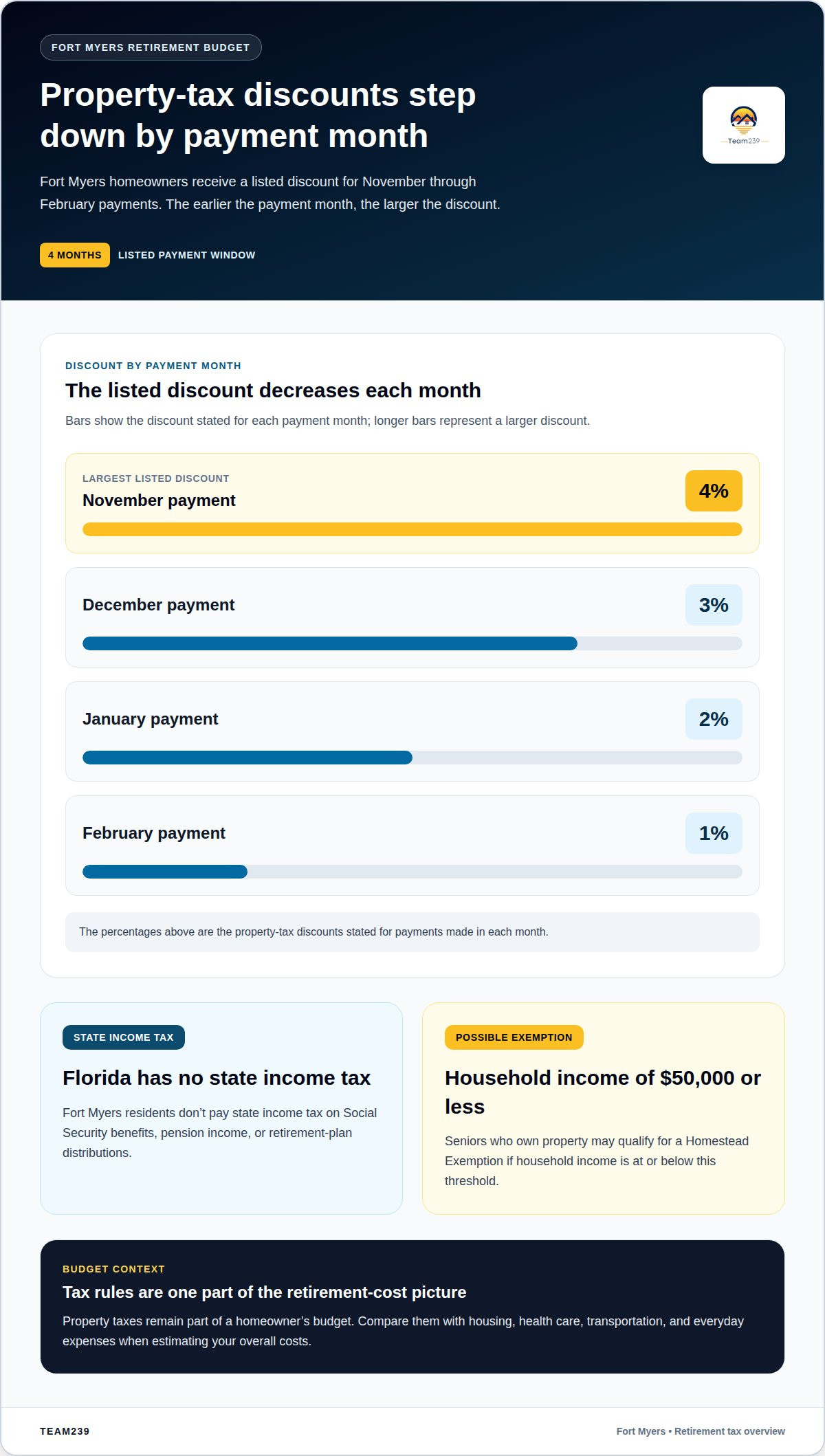
Florida has no state income tax, so Fort Myers residents don’t pay state income tax on Social Security benefits, pension income, or retirement-plan distributions. This simplifies the state-tax side of planning, while property taxes remain part of a homeowner’s budget.
Fort Myers homeowners receive a property-tax discount of four percent for November payments, three percent for December, two percent for January, and one percent for February. Seniors who own property may qualify for a Homestead Exemption if household income is $50,000 or less.
Health Care and Long-Term Care Costs
Budget for health care by considering coverage, access to care, and potential out-of-pocket spending. To support continuity of care after a move, compare Medicare Advantage plans, specialist availability, provider networks, and possible out-of-pocket costs in the Fort Myers area.
Long-term care expenses depend on the type of support needed, how often it’s needed, and the care setting. Include these factors alongside Medicare and routine health care so your estimate reflects current needs and possible future support.
Comparing Florida cities by housing prices
In this Florida comparison, Fort Myers falls between lower-priced and higher-priced options. These figures are a starting point for comparing locations, not a complete estimate of retirement housing expenses.
Ocala has the lowest listed median, while Naples has the highest. Sarasota also sits well above Fort Myers in this comparison. If purchase price is a priority, compare Fort Myers with more affordable options such as Ocala and higher-priced nearby destinations such as Naples.
The Villages and Melbourne have prices close to Fort Myers in this comparison. Similar medians don’t mean the homes, neighborhoods, or daily routines are alike. The Villages may appeal to retirees considering a community designed for older adults, while Fort Myers offers a different Southwest Florida setting. Compare the home and lifestyle you want, not just the headline figure.
Use each median as a broad benchmark, then compare specific homes and their ownership costs. A Fort Myers home priced below the city’s median may still strain a fixed income if its ongoing expenses are substantial. A higher-priced home in Ocala or Melbourne may fit differently depending on its features and your priorities.
Location also shapes what your budget can support. Compare access to the amenities and services you expect to use, as well as home size and condition. If you’re weighing Fort Myers against Naples or Sarasota, consider whether the higher median aligns with the features and location you value. A useful comparison connects the city’s median with your full housing budget.
Transportation and airport access
Fort Myers has no public transportation, so a car is essential for getting around. Everyday errands, appointments, and social plans all depend on how comfortably you can drive. When comparing homes, consider how your regular destinations fit into your driving routine, not just how the property looks.
Car dependence also belongs in a retirement budget. Account for your household’s vehicle-related expenses and the practical demands of driving to groceries, health care, and leisure activities. Someone who prefers walking to daily destinations may experience Fort Myers differently from a retiree who plans to drive regularly.
Southwest Florida International Airport is 10 miles from Fort Myers. Its proximity can simplify airport trips for retirees who travel or expect visits from family and friends. Consider how you’d reach the airport from a potential home, including the drive and any arrangements needed for your vehicle while away.
Fort Myers is also two or three hours from larger Florida cities, including Miami, Tampa, and Orlando. Those distances matter if you expect frequent regional trips, event outings, or visits to people in those cities. Major destinations are accessible by road, but the journeys take planning.
Compare transportation needs with each home’s location. List places you expect to visit often, such as medical appointments, shops, and social activities, then consider how you’d reach them from that address. A home’s distance from Southwest Florida International Airport may also matter if flying is part of your routine.
Before deciding, map a typical week and an occasional trip to Tampa, Miami, or Orlando. This practical exercise helps reveal how often you’ll rely on a car and whether the location supports your plans. For help aligning a home search with your move and daily travel needs, explore Southwest Florida relocation support.
Team239: Residential Resale Representation
Team239 can help turn your Fort Myers retirement priorities into a focused home search through Residential Resale Representation. If you’re comparing existing homes, consider how each option aligns with your budget, preferred location, and daily routine, including driving needs and access to amenities.
For buyers considering a newly built home, Team239 also provides New Construction Buyer Representation. Relocation Consulting can support people planning a move to Southwest Florida, while Luxury Property Listing Services are relevant to homeowners preparing to sell a luxury property.
Bring your priorities together before choosing a home: the features you need, the trade-offs you can accept, and how the location fits your plans. Contact Team239 to discuss your move or home search.
Make Your Retirement Move With a Clear Plan
Whether Fort Myers is a good place to retire on a budget depends on how well your priorities fit your everyday life. Turn your research into clear home criteria: the features you need, a location that suits your routine, and the trade-offs you’re comfortable making.
A focused plan can make your next decision easier. Separate essentials from preferences, then use that distinction to compare homes and neighborhoods. If you’re moving from elsewhere, consider how a new home will support the routines and connections you want to build in Southwest Florida.
Team239 can help you explore residential resale options, new construction, or luxury property listings as your plans take shape. Contact Team239 to discuss your move and take the next step toward a home that fits your retirement goals.
Frequently Asked Questions
What is the cost of living in Fort Myers, Florida, compared with the U.S. average?
Fort Myers housing costs average 15 percent below the national average, but housing alone doesn’t represent the full cost of living. Your overall comparison depends on expenses such as transportation, health care, food, and homeownership costs. For a useful personal estimate, group your recurring expenses by category and compare each with your retirement income, rather than treating the housing figure as a measure of every household expense.
What are typical rents and home prices in Fort Myers?
Rent depends on factors such as property type, size, location, and lease terms, so compare available homes with your preferred monthly housing budget. Renters should include recurring housing expenses; buyers should look beyond the purchase price to ongoing costs. This helps you distinguish a manageable payment from one that strains other spending.
How much do retirees need per month to live comfortably in Fort Myers?
A comfortable monthly budget depends on housing, health care, transportation, and the routine you want to maintain. Start with dependable retirement income, then list recurring expenses such as rent or home costs, groceries, medical spending, and driving. A homeowner who needs frequent medical care and regular car trips will have a different budget from a renter with fewer transportation needs. Set your target based on your own expenses.
How much do homeowners insurance, flood insurance, and property taxes cost in Fort Myers?
Insurance and property taxes vary by home, so use the specific property’s insurance estimates and tax bill when comparing ownership costs. Consider the property and coverage when assessing insurance, and review the current tax bill and any applicable exemption. Keep homeowners coverage, flood coverage, and taxes as separate budget lines to see how each affects the total cost of owning a particular home.
What affordable transportation options are available for retirees in Fort Myers?
Fort Myers has no public transportation, so a car is essential for getting around. To manage transportation spending, combine errands into fewer trips, choose a home convenient to places you visit often, and coordinate rides with family or friends when practical. These choices can reduce driving demands, but they don’t replace the independence a car provides for appointments, shopping, and other regular activities across the area.
What are the main risks of retiring in Fort Myers, including hurricanes, flooding, and extreme heat?
Key considerations include hurricane season, possible flooding, and summer heat. Hurricane season runs from June 1 to November 30, while summer temperatures commonly reach the 90s. For a specific home, consider its location and how you’d respond to severe weather. Also think through how heat could affect outdoor routines, and whether you’re comfortable adapting plans during hot or stormy periods.
Comments