
Final walkthrough checklist for Florida buyers: What to check

A quick glance won’t tell you whether the home is ready for closing. Use a final walkthrough checklist for Florida home buyers to check the property room by room, test visible and operable items, and confirm that agreed repairs are complete. The walkthrough should take place shortly before closing and confirm the home is in the condition you agreed to purchase. It isn’t a substitute for a home inspection.
It’s easy to focus on the big picture when you’re about to get the keys. A systematic final walkthrough checklist for Florida home buyers can help you spot smaller problems, from a leaking faucet to damage from moving, while there’s still time to raise them. This guide covers what to test throughout the home, what to look for in new construction, and how to document and report concerns. If something doesn’t match the agreement, contact your agent promptly. The options for addressing it before closing depend on your contract.
Table of Contents
What Is a Final Walk Through and Why Does It Matter?
A final walkthrough is a last check of the home’s condition shortly before closing. It helps confirm that the property matches your agreement and negotiated repairs are complete. It isn’t a home inspection: a buyer’s walkthrough focuses on visible, operable items, not a full assessment of the building or concealed systems.
Use the inspection report to revisit flagged issues, then check for changes since the inspection. Open and close doors and windows, test their locks, and confirm the keys work. A Florida four-point inspection separately covers the roof, electrical system, plumbing, and HVAC. A walkthrough doesn’t replace that inspection or a wind mitigation inspection.
Attic and roof: Note visible signs of damage from accessible areas, but don’t treat a walkthrough as an assessment of the roof or attic.
Garage: Test the garage door and its controls; check visible surfaces for damage or items left behind.
Drainage and exterior: Walk around the property and look for visible changes, standing water, or new damage.
Doors and windows: Operate each one, test locks, and match the keys to the relevant doors.
Visible checks have limits. A buyer’s walkthrough can’t assess concealed plumbing, wiring, or ductwork, and it doesn’t establish the roof’s condition or age. Because roof age and condition can affect insurance eligibility and cost in Florida, raise concerns that need a closer assessment before closing.
Arrange a professional re-inspection if the original report identified an issue needing further assessment, a repair appears incomplete, or a new concern suggests a hidden problem. A qualified inspection can examine areas a walkthrough cannot. The Consumer Financial Protection Bureau recommends confirming that the home is acceptable and agreed repairs are complete before closing. For most standard home-purchase mortgages, it also says borrowers generally must receive the Closing Disclosure at least three business days before closing.
Documenting and reporting walkthrough problems
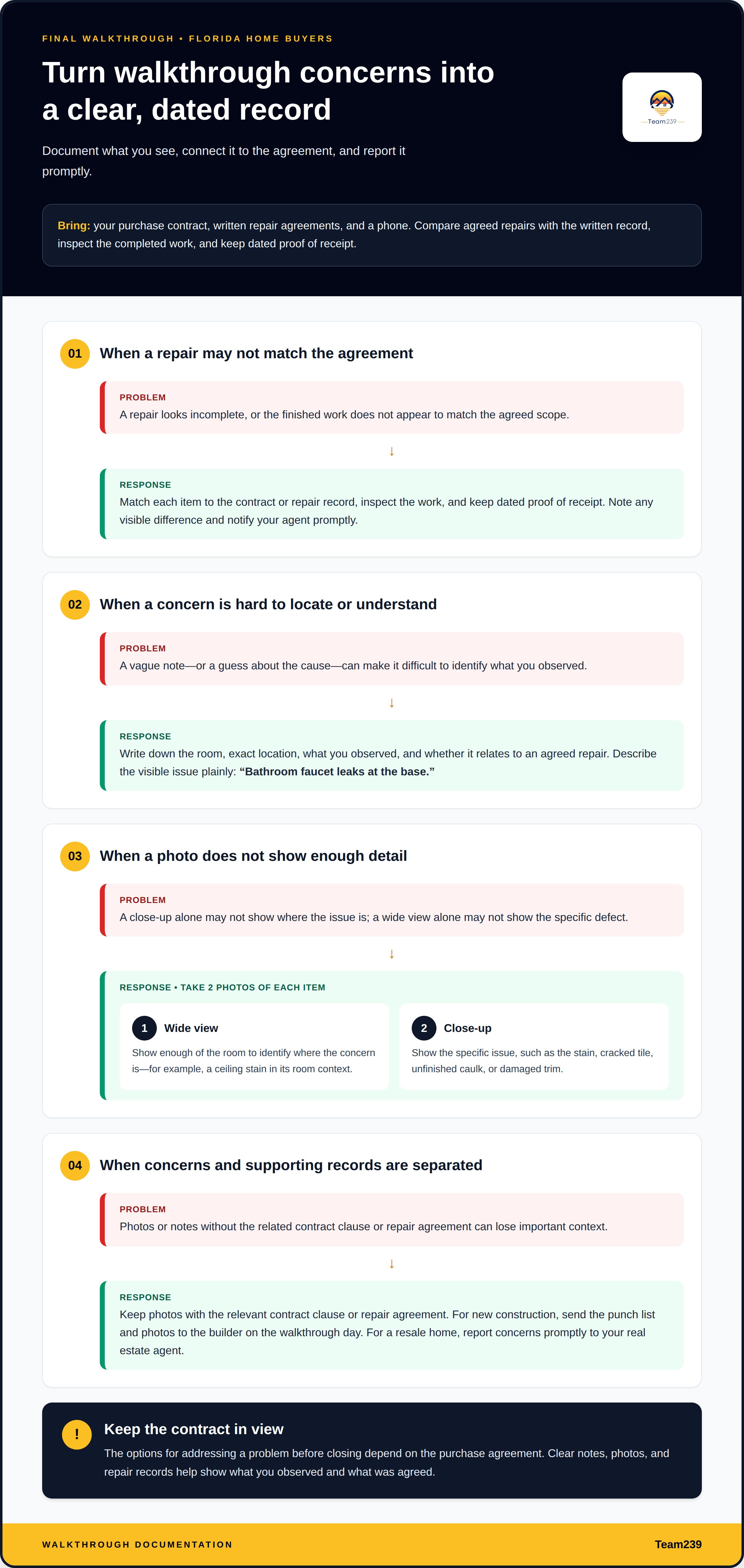
Bring your purchase contract, written repair agreements, and a phone to the walkthrough. Compare each agreed repair with the contract or repair record, then inspect the completed work. Ask for dated proof of receipt verifying the work, and keep it with your transaction documents. For example, match a repaired ceiling area to the agreed scope and note any visible damage that remains.
Record each concern clearly while you’re still at the property. Include the room, exact location, what you observed, and whether it affects an agreed repair. Photos make the punch list easier to understand: take two of each item, one wide shot showing its location and one close-up of the problem.
Capture the whole context: Photograph a ceiling stain with enough surrounding room visible to identify where it is.
Show the detail: Take a close-up of the stain, cracked tile, unfinished caulk, or other specific issue.
Keep records together: Save photos alongside the relevant contract clause or repair agreement so each concern has context.
Write plainly: Describe what you see, such as “bathroom faucet leaks at the base,” rather than guessing at the cause.
Send the punch list and photos to the builder on the walkthrough day to create a dated written record. For a resale home, report concerns promptly to your real estate agent, who can help communicate them in line with the purchase agreement. The options for addressing a problem before closing depend on the contract.
How can buyers verify agreed repairs and receipts during the final walkthrough? Match each completed item to the written agreement, inspect the work, and keep dated proof of receipt. If a repair is incomplete or the evidence doesn’t match the agreed scope, document the difference and notify your agent promptly. Clear records help identify the issue and discuss next steps before closing.
Purpose of a new-construction final walkthrough
For a newly built Florida home, the final walkthrough checks whether visible, operable items match the contract and agreement. Schedule it when you schedule closing, so the appointment isn’t squeezed in. A Florida buyer’s walkthrough usually takes place within a day or two of closing. A walkthrough of an average single-family home typically takes 30 to 60 minutes. Use that time to spot defects, unfinished details, and cosmetic issues before closing.
Bring the agreed plans, options, and repair or completion records. Compare installed features with the written agreement, including fixtures, finishes, and appliances. If a specified item is missing, record its location and describe what the agreement says. A clear punch list helps distinguish an incomplete contractual item from a cosmetic concern.
Test operating features: Open doors and windows, check locks, and operate lights, faucets, and appliances.
Check the garage: Run the garage door and note unusual noise, damage, or incomplete finishes.
Test GFCI outlets: Plug in a lamp, press the outlet’s test button to switch the light off, then press reset to restore it.
Record finish issues: Photograph paint marks, chipped tile, uneven caulking, or damaged trim for the punch list.
This walkthrough checks visible and operable items. It doesn’t assess the attic, roof, or concealed plumbing, wiring, and ductwork, which aren’t exposed during ordinary room-by-room checks. Keep the distinction clear: a walkthrough can identify a visible defect, but it cannot establish the condition of hidden systems.
For each concern, note the room, location, and what you observed, then take photos. Share the punch list and images with the builder on the walkthrough day to create a dated record. Compare discrepancies with the written agreement before closing, and don’t treat a verbal explanation as proof that a missing item or defect has been addressed.
Room-by-room walkthrough checks
Move room by room, testing items instead of relying on a quick visual scan. Compare included features with the purchase agreement, since the seller’s obligations depend on what both parties agreed to.
How do Florida home buyers check that included appliances and fixtures are present and working? Compare them with the agreement, then operate each appliance and test the fixtures, switches, outlets, faucets, and doors. Check whether doorknobs and cabinet handles are present, and refer to the purchase agreement if their status is unclear.
How should buyers confirm the seller has removed belongings and left the home clean? Check every room, closet, cabinet, garage, and yard for belongings that should have been removed. Confirm the home is broom-clean, and note any new damage that may have occurred while furniture was moved.
Kitchen: Run included appliances and the garbage disposal, and test cabinet doors and drawers; operation can reveal issues a surface check misses.
Bathrooms: Run each faucet and showerhead for hot and cold water, flush toilets, and look for mold, leaks, or water damage.
Living areas and bedrooms: Test switches and outlets, and use a phone charger to check outlets; open and close windows and doors to test operation and locks.
Heating and cooling: Set the thermostat to cool and check whether cold air reaches each register within a few minutes.
Garage and exterior: Operate the garage door, then walk the yard for leftover items, debris, or damage from moving.
As you check each room, compare visible fixtures and included appliances with the agreement. A clean, functioning appliance and a present fixture are separate checks: inspect appearance, then test operation. Record anything missing, damaged, or not working, including its room and location, so you can clearly report the concern before closing.
Team239: New Construction Buyer Representation
Team239 provides New Construction Buyer Representation for buyers navigating a new-build purchase, from reviewing the process to preparing for the final walkthrough. This support can help keep your priorities and the written agreement in focus as construction decisions move toward closing.
Consider working with a real estate agent when weighing a new-construction home or when you want guidance as you approach the walkthrough. A clear plan helps you organize questions about visible defects, unfinished items, and how the home aligns with the agreement. If you find a concern, your agent can help you understand the next step in the purchase process.
For a new build or another Florida home purchase, contact Team239 to discuss your plans.
Make Your Final Walkthrough a Clear Decision Point
A final walkthrough checklist for Florida home buyers works best as a decision tool, not just a room-by-room inventory. Use your notes to separate observations from assumptions and identify which concerns need a clear conversation before closing. This keeps the focus on the home’s condition and the commitments documented in your purchase agreement.
As you prepare for the next step, keep the process collaborative. Share relevant details promptly, describe them specifically, and make sure everyone involved understands what still needs attention. If a concern calls for closer assessment, treat that as a separate step rather than expecting a walkthrough to answer questions about concealed systems. Clear priorities help you move forward with a more informed view of the property and the decisions ahead.
For guidance as you prepare for your purchase, contact Team239 for walkthrough guidance. A thoughtful plan can help you approach closing with clarity and confidence.
Frequently Asked Questions
What If You Find a Problem?
Notify your real estate agent promptly and explain how the issue differs from the written agreement. The options for addressing it before closing depend on your contract, so don’t assume a repair or credit is automatic. For a new-construction concern, send the builder a clear written description and photos on the walkthrough day. Keep the message and any response with your transaction records.
Should I bring my inspector again?
A professional re-inspection isn’t needed for every walkthrough, but consider one if you find a concern that needs technical assessment or a previously flagged issue remains unresolved. A recurring ceiling stain, for example, may need closer evaluation than a visual walkthrough can provide. Tell your agent what you observed so next steps can be considered alongside your agreement and closing timeline.
What is a final walkthrough checklist for Florida home buyers?
A final walkthrough checklist for Florida home buyers is a practical guide to checking a home’s visible condition before closing. It helps organize checks of rooms, appliances, doors, windows, and agreed repairs, while noting concerns for follow-up. It isn’t a professional inspection and can’t assess concealed systems. Use your purchase agreement to clarify which included items and repairs to confirm.
When should buyers do the final walkthrough before closing in Florida?
Arrange the walkthrough shortly before closing, usually within a day or two of the closing date. Schedule it when you arrange closing so there’s time to inspect the home and raise concerns. For new construction, this timing also lets you review visible defects and unfinished items against the agreement. If an issue appears, notify your agent promptly.
What should buyers inspect during a Florida home final walkthrough?
Test the home’s visible, operable features, including doors, windows, locks, included appliances, faucets, toilets, switches, and outlets. Also test the doorbell and smart security system if present. For a garage door, check that its safety beam makes it reverse when something passes through the beam. Compare included features with the agreement, and note anything missing or malfunctioning.
What should buyers check for water leaks, mold, roof damage, and storm damage in Florida?
Look for visible mold, water stains, damp areas, or leaks around bathroom fixtures, under sinks, and on ceilings. Walk around the exterior to check for visible storm-related damage or standing water. A walkthrough can’t establish the roof’s full condition, but roof age and condition can affect insurance eligibility and cost in Florida. Arrange a professional assessment if visible signs suggest a problem beyond surface checks.
All content provided on the Naples Florida Real Estate Channel and other associated social media platforms is for informational/entertainment purposes only. The owner of Naples Florida Real Estate makes no representations as to the accuracy or completeness of any information on this site or found by following any link on this site. Information provided is subject to change, please consult Kristin and Jonathan directly or another licensed real estate agent to receive the best expertise for your specific situation. The owner of Naples Florida Real Estate will not be liable for any errors or omissions in this information nor for the availability of this information. The owner will not be liable for any losses, injuries, or damages from the display or use of this information.
Comments